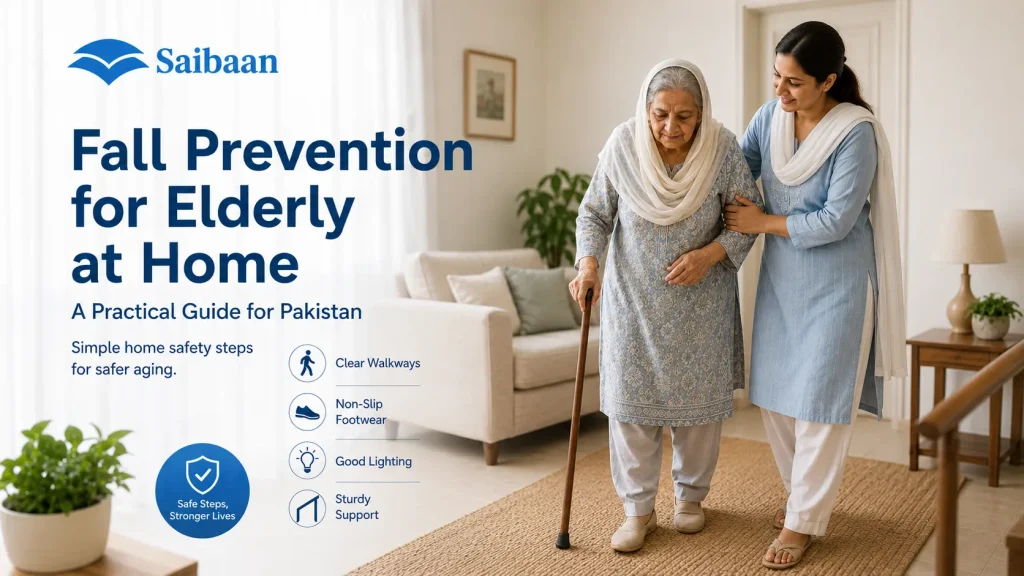
A fall that seems minor to a younger person can be life-changing for an elderly one. Hip fractures, head injuries, and loss of confidence after a fall are among the leading causes of long-term decline in elderly patients — and a significant proportion of falls happen at home, in familiar surroundings, during routine activities.
For families in Pakistan caring for elderly parents, understanding what causes falls and how to reduce the risk is one of the most practical things they can do to protect their loved ones.
Why Elderly People Are More Vulnerable to Falls
Several factors combine to increase fall risk as people age. Muscle weakness, reduced balance, slower reflexes, and declining vision all make it harder to recover from a misstep that a younger person would barely notice. Medications — particularly blood pressure drugs, sedatives, and diuretics — can cause dizziness or light-headedness that increases fall risk significantly.
Chronic conditions common in Pakistan elderly population, such as diabetes, arthritis, and Parkinson disease, add further risk. Diabetic nerve damage reduces sensation in the feet, making it harder to detect uneven surfaces. Arthritis limits joint flexibility and strength. Parkinson disease affects both balance and gait.
Understanding which risk factors apply to your parent is the starting point for an effective prevention plan.
Making the Home Safer
Most falls in elderly patients happen in the home — and most are preventable with straightforward modifications. The goal is to reduce hazards without making the home feel clinical or restrictive.
Bathroom: Install grab bars next to the toilet and inside the shower or bathtub. Use a non-slip mat on wet surfaces. A shower chair removes the need to stand for extended periods.
Flooring: Remove loose rugs or secure them with non-slip backing. Keep floors clear of cables, shoes, and other items that can be tripped over. Ensure flooring transitions between rooms are smooth and visible.
Lighting: Poor lighting is one of the most overlooked fall risks. Improve lighting in hallways, staircases, and bathrooms. Add a night light between the bedroom and bathroom for nighttime trips.
Stairs: Install handrails on both sides if possible. Ensure each step is clearly visible and in good repair. If stairs have become difficult, consider whether the patient bedroom can be moved to the ground floor.
Bedroom: Keep commonly used items within easy reach so the patient does not need to stretch or climb. Ensure the bed height allows the patient to sit with feet flat on the floor.
Exercise and Physiotherapy
Physical strength and balance are among the most modifiable fall risk factors. Regular exercise — even gentle movement — significantly reduces fall risk in elderly patients by improving muscle strength, coordination, and confidence.
A home physiotherapist can design a safe, progressive exercise programme tailored to the patient specific condition and limitations. Balance exercises, leg strengthening, and gait training are the most effective components. For patients who have already had a fall, physiotherapy also addresses the fear of falling, which itself increases fall risk by causing excessive caution and reduced movement.
Saibaancare Home Nurses, Physiotherapists & Attendants service includes home physiotherapy visits across Pakistan, helping elderly patients build strength and confidence safely at home.
Medication Review
If your parent is on multiple medications, a medication review with their doctor is worth arranging. Drug interactions and side effects — particularly dizziness, drowsiness, and low blood pressure — are a leading and often overlooked cause of falls in elderly patients.
Do not stop or adjust medications without medical advice. Instead, raise the concern with the treating doctor and ask specifically whether any current medications increase fall risk and whether alternatives exist.
When to Seek Professional Support
If your parent has already had a fall, or if you notice they are moving more cautiously, holding onto furniture for support, or avoiding activities they previously managed easily, these are signs that professional assessment is needed.
Saibaancare offers home care services including patient attendants who provide physical support and supervision during daily activities, reducing fall risk for elderly patients who need consistent presence. For families coordinating care from abroad, having a trained attendant on the ground provides both safety and peace of mind. Contact the team to discuss the right level of support for your parent.
The Bottom Line
Falls in elderly patients are not inevitable. A combination of home modifications, regular exercise, medication review, and professional support where needed can significantly reduce risk. According to the World Health Organization, falls are the second leading cause of accidental injury deaths worldwide, and most are preventable. The earlier these steps are taken, the better — before a fall happens, not after.
FAQs
Q: What is the most common cause of falls in elderly people at home?
A: Muscle weakness and balance problems are the leading causes, often combined with environmental hazards like loose rugs, poor lighting, and wet floors. Medications that cause dizziness are also a significant contributing factor.
Q: At what age do falls become a serious concern?
A: Fall risk increases gradually with age, but becomes a significant concern from around 65 onwards. Any elderly person with mobility limitations, chronic conditions, or multiple medications should have a fall risk assessment.
Q: Can physiotherapy really reduce fall risk?
A: Yes. Research consistently shows that targeted exercise programmes — particularly balance and strength training — significantly reduce both the frequency and severity of falls in elderly patients.
Q: How do I assess whether my elderly parent is at risk of falling?
A: Look for signs such as unsteady walking, holding onto furniture for support, avoiding stairs, taking longer to stand up, or reporting dizziness. A professional assessment by a physiotherapist or doctor provides a more thorough picture.
Q: Are falls after a hip fracture more dangerous?
A: Yes. Recovery from hip fracture in elderly patients is lengthy and often incomplete. Subsequent falls carry a higher risk of serious injury. Fall prevention becomes especially important after any fracture.
Q: What is the single most effective home change to prevent falls?
A: Installing grab bars in the bathroom is consistently cited as one of the highest-impact single changes, as bathrooms combine wet surfaces, limited space, and the need to transfer between positions.