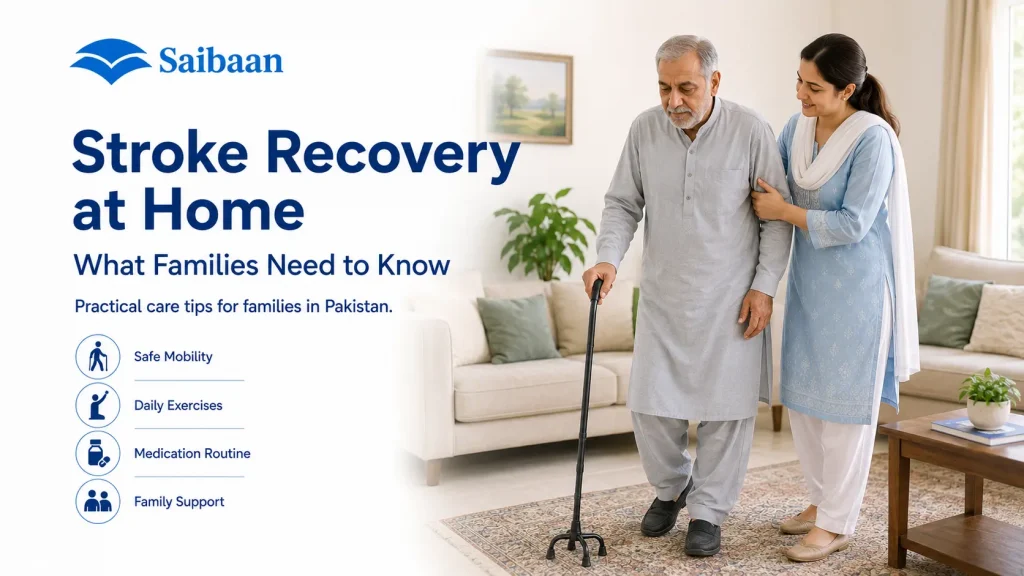
A stroke can change a person life in minutes. The recovery that follows — often lasting months or years — happens largely at home, with family members playing a central role in day-to-day rehabilitation. For Pakistani families, particularly those managing care from abroad, understanding what stroke recovery involves and how to support it effectively is essential.
This guide covers what to expect during stroke recovery at home, how to support rehabilitation, and when professional help makes a meaningful difference.
Understanding What a Stroke Does to the Body
A stroke occurs when blood supply to part of the brain is interrupted, either by a blockage or a bleed. The effects depend on which part of the brain is affected and for how long.
Common effects include weakness or paralysis on one side of the body, difficulty speaking or understanding speech, problems with memory and concentration, difficulty swallowing, and changes in vision. Some patients recover quickly and fully. Others face a longer rehabilitation journey, particularly those with larger strokes or significant delays in treatment.
The brain has a remarkable ability to reorganise itself after injury — a process called neuroplasticity. Rehabilitation works by stimulating this process through consistent, repetitive practice of affected functions. This is why early, consistent rehabilitation at home matters so much.
The First Weeks After Discharge
Most stroke patients are discharged from hospital within days to a few weeks. At this point, they still need significant support — physically, medically, and emotionally.
The immediate priorities are medication management, fall prevention, and beginning rehabilitation exercises. Blood thinners, blood pressure medications, and other prescribed drugs must be taken consistently — missing doses significantly increases the risk of a second stroke.
According to the World Stroke Organization, up to 25% of stroke survivors experience a second stroke within five years. Controlling blood pressure, taking medications correctly, and maintaining a healthy lifestyle are the most effective preventive measures.
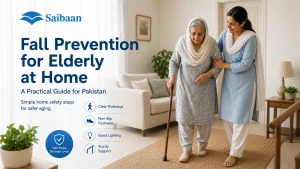
The home environment should be assessed for fall risks — remove loose rugs, improve lighting, install grab bars in the bathroom, and keep pathways clear. A patient weakened on one side is at significantly higher fall risk than before their stroke.
Physiotherapy at Home After a Stroke
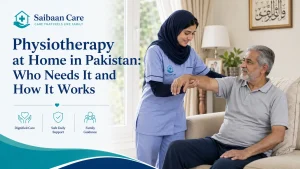
Physiotherapy is the cornerstone of stroke recovery. It works on rebuilding movement, improving balance, and retraining the brain to control affected limbs through repetitive, structured exercise.
A home physiotherapist assesses the patient current function and designs a progressive programme. For a patient with arm weakness, this might involve daily exercises to rebuild strength and coordination. For a patient with gait problems, it focuses on walking safely with or without aids. Sessions typically happen several times a week, with exercises the patient and family can practise between visits.
Saibaancare Home Nurses, Physiotherapists & Attendants service includes home physiotherapy for stroke patients across Pakistan, delivered by trained professionals coordinated as part of a broader recovery plan.
Speech and Cognitive Rehabilitation
Many stroke survivors experience difficulty with speech, language, or memory. Speech therapy — whether conducted in person or via video — helps patients regain communication abilities through targeted exercises.
Cognitive rehabilitation focuses on memory, attention, and problem-solving. Simple daily activities — reading, conversation, puzzles, and structured tasks — support cognitive recovery. Family members play a crucial role here by engaging the patient in meaningful activity rather than leaving them passive.
Managing Blood Pressure and Medications at Home
High blood pressure is the single biggest risk factor for stroke, and it remains the most important thing to control during recovery to prevent recurrence. Blood pressure should be monitored regularly at home — ideally daily — and readings recorded for review at medical appointments.
Saibaancare health tracking service includes regular vital sign monitoring and medication management for stroke patients, providing families abroad with consistent updates on their parent condition. For doctor consultations during recovery, our dedicated doctor consultation service connects patients with physicians who already have access to their health record.
Emotional Recovery After Stroke
Depression affects up to one third of stroke survivors, according to the Stroke Association. It is not simply a reaction to disability — it has a neurological component related to the brain injury itself.
Family members should watch for persistent low mood, withdrawal from activities, tearfulness, or loss of motivation. These are not signs of weakness or ingratitude — they are symptoms that deserve medical attention. Speak to the treating doctor if depression is suspected.
Maintaining a daily routine, encouraging social interaction, and involving the patient in family life as much as possible all support emotional recovery alongside physical rehabilitation.
When to Bring in Professional Support
Stroke recovery is intensive and ongoing. Professional home care makes a significant difference when the patient needs daily physiotherapy, medication management, blood pressure monitoring, or personal care support.
Saibaancare offers home care services for stroke patients across Pakistan, including nursing, physiotherapy, and health monitoring coordinated into a single care plan. For families managing recovery from abroad, regular structured updates mean you are always informed. Contact the team to discuss a recovery plan for your parent.
The Bottom Line
Stroke recovery at home in Pakistan requires consistency, the right support, and realistic expectations. Progress is rarely linear — there will be plateaus and setbacks alongside genuine improvements. The families who manage recovery best are those who understand the process, maintain rehabilitation routines, and bring in professional help when the care needed exceeds what they can safely provide.
FAQs
Q: How long does stroke recovery take at home?
A: Recovery timelines vary significantly. Most recovery happens in the first three to six months, but improvement can continue for years with consistent rehabilitation. The severity of the stroke and how quickly treatment was received are the strongest predictors of outcome.
Q: Can a stroke patient fully recover at home in Pakistan?
A: Partial or full recovery is possible for many stroke patients, particularly with early, consistent rehabilitation. The home setting is often better for recovery than institutional care, provided adequate professional support is in place.
Q: What exercises help stroke recovery at home?
A: This depends on what was affected. A physiotherapist will prescribe specific exercises — commonly arm and leg strengthening, balance training, and walking practice. Family members can support between sessions by assisting with prescribed exercises.
Q: How do I prevent a second stroke at home?
A: The most important steps are taking prescribed medications consistently, controlling blood pressure, eating a low-salt diet, avoiding smoking, and keeping follow-up appointments with the treating doctor.
Q: Is depression normal after a stroke?
A: Yes. Post-stroke depression is very common and has both psychological and neurological causes. It should be treated as a medical condition, not dismissed as a character issue. Speak to the treating doctor if you notice persistent low mood in your parent.
Q: When should I hire a home nurse for a stroke patient?
A: When the patient needs daily medication management, wound or catheter care, blood pressure monitoring, or personal hygiene assistance that family members cannot safely or consistently provide.