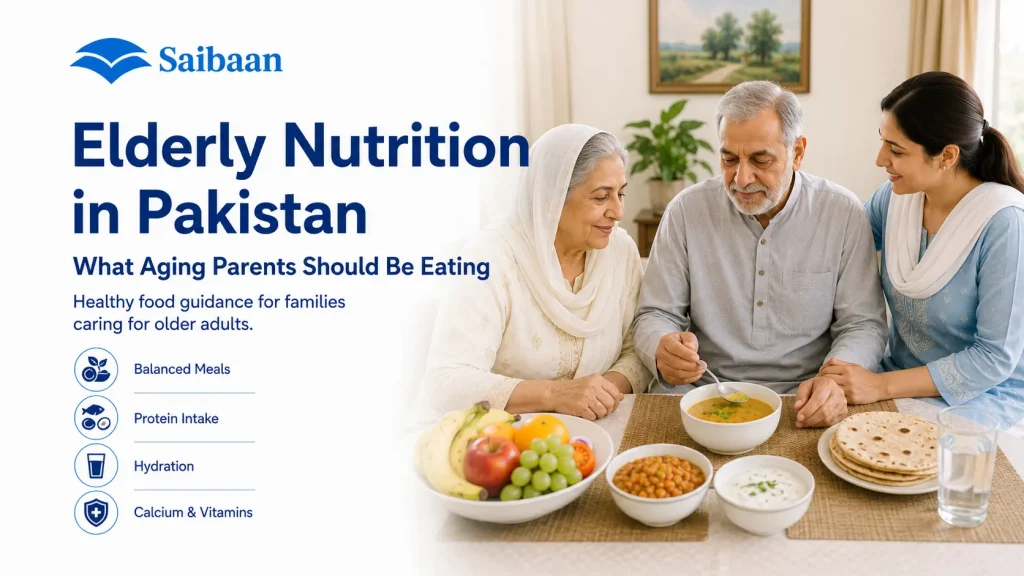
Poor nutrition is one of the most overlooked health risks for elderly patients in Pakistan. It does not announce itself the way a fall or a fever does — it develops slowly, through smaller portions, reduced appetite, and a narrowing diet that leaves the body without what it needs to function well.
For families managing the care of aging parents — particularly from abroad — understanding what good nutrition looks like in old age, and how to support it at home, makes a real difference to long-term health outcomes.
Why Nutritional Needs Change With Age
The body’s relationship with food changes significantly as people age. Appetite often decreases, but nutritional requirements do not — and in some areas they actually increase. This combination creates a real risk of malnutrition even in patients who appear to be eating regularly.
Several factors drive this. Reduced physical activity means less hunger. Medications can suppress appetite or alter taste. Dental problems make certain foods difficult to chew. Social isolation — particularly for elderly people living alone — reduces the motivation to prepare and eat proper meals.
For elderly patients in Pakistan, traditional eating patterns can work both for and against good nutrition. Daal, sabzi, yoghurt, and eggs are excellent staples. But an over-reliance on chai, roti, and rice — with insufficient protein and vegetables — is a common pattern that leaves elderly patients nutritionally depleted over time.
The Most Important Nutrients for Elderly Patients
Protein is the most critical nutrient for elderly patients and the most commonly deficient. Muscle mass declines with age — a process called sarcopenia — and adequate protein intake slows this decline. Eggs, chicken, fish, daal, and dairy are all excellent sources. Aim for a protein source at every main meal.
Calcium and Vitamin D support bone density, which declines in old age and increases fracture risk. Dairy products, leafy greens, and fortified foods provide calcium. Vitamin D is synthesised through sunlight exposure — something many housebound elderly patients in Pakistan get less of than they need. A supplement may be appropriate; discuss with the treating doctor.
Fibre supports digestive health and helps manage blood sugar and cholesterol. Whole grains, vegetables, lentils, and fruit are the best sources. Many elderly Pakistani diets are low in fibre, particularly if refined roti and rice form the bulk of meals.
Hydration is critically underestimated in elderly care. The sensation of thirst diminishes with age, meaning elderly patients often do not feel thirsty even when dehydrated. Dehydration worsens confusion, increases fall risk, and strains kidney function. Encourage regular fluid intake throughout the day — water, lassi, and light soups all count.
Common Nutrition Problems to Watch For
Unintentional weight loss of more than 2-3 kg over a few months is a significant warning sign. It suggests either inadequate intake, a medical issue affecting absorption, or both. Any unexplained weight loss in an elderly patient should be discussed with a doctor promptly.
Skipping meals is common in elderly patients who live alone or have reduced appetite. Even one missed meal a day creates a significant nutritional deficit over time. A structured meal schedule — three meals at consistent times — is more effective than relying on the patient to eat when they feel like it.
Over-reliance on chai as a meal substitute is a cultural pattern that affects many elderly Pakistanis. Chai provides minimal nutrition and the tannins in tea can reduce iron absorption when consumed with meals. It is not necessary to eliminate chai, but it should not replace meals.
Practical Steps for Families
If your parent is losing weight, eating less, or their diet has become very limited, the first step is a conversation with their doctor to rule out underlying medical causes.
From there, practical changes make a meaningful difference: adding a boiled egg or a cup of daal to daily meals, ensuring a protein source at breakfast, keeping healthy snacks accessible, and encouraging fluid intake throughout the day rather than waiting for thirst.
For families coordinating care from abroad, Saibaancare’s dedicated care manager service monitors your parent’s daily routine and flags changes in appetite or weight. Our home care services can include a patient attendant who ensures meals are prepared and eaten consistently. Contact the team to discuss a care plan that includes nutritional monitoring.
The Bottom Line
Good nutrition in old age is not complicated, but it does require attention. Adequate protein, hydration, calcium, and fibre — delivered through consistent, structured meals — form the foundation. According to the World Health Organization, malnutrition in older adults significantly increases the risk of hospitalisation, slower recovery from illness, and reduced quality of life.
The families who stay most informed about their parent’s eating habits — even from abroad — are the ones best positioned to catch nutritional decline before it becomes a medical crisis.
FAQs
Q: How do I know if my elderly parent is malnourished?
Key signs include unintentional weight loss, fatigue, muscle weakness, slow wound healing, and increased susceptibility to illness. A doctor can confirm with a simple blood test checking protein levels, vitamin D, and other markers.
Q: How much protein does an elderly person need daily?
Most elderly adults need approximately 1 to 1.2 grams of protein per kilogram of body weight per day — more than younger adults. For a 60kg person, that is around 60-72 grams of protein daily, roughly equivalent to 3 eggs, a cup of daal, and a portion of chicken or yoghurt.
Q: What are the best foods for elderly patients in Pakistan?
Eggs, daal, chicken, fish, yoghurt, leafy vegetables, whole grain roti, fruit, and plenty of water. These provide protein, fibre, vitamins, and hydration without being difficult to prepare or expensive.
Q: How do I encourage an elderly parent who has lost their appetite?
Offer smaller, more frequent meals rather than three large ones. Make food visually appealing and serve familiar, favourite dishes. Eating together — even via video call — can improve intake. Consult a doctor if appetite loss is persistent.
Q: Is chai bad for elderly patients?
Chai is not harmful in moderation, but it should not replace meals. The tannins in tea reduce iron absorption when consumed with food. Limit chai to between meals and ensure it is not substituting for proper nutrition.
Q: Can a home caregiver help with elderly nutrition?
Yes. A trained patient attendant can prepare nutritious meals, ensure meals are eaten on schedule, monitor weight, and flag changes in appetite to the family or care manager.